Grounds
One of our goals at Saba Cooperative is for the location, layout, and materials used on the grounds and in the structures to be ecologically and economically sustainable. We encourage the use of local and natural building materials and the utilization of passive and active solar collection and storage systems. In cold climate communities, we realize there is a significant concern for heat retention, so we encourage using the support of nature for this purpose using passive solar, thermally-massive, and earth-sheltered designs for the community center, living quarters, and greenhouses. We also promote the harvesting and storage of rainwater, by integrating water catchment and storage systems into building designs. Towards the abolition of waste, we encourage recycling all gray-water and using composting toilets instead of a septic system.
Additionally, Saba’s goal is for the communities to have a sustainable food system that meets their food needs while also maintaining healthy ecosystems. Saba encourages the use of permaculture principles to promote conservation and regeneration of healthy ecological conditions, not only for the current communities, but for generations to come. Permaculture differs from conventional agriculture in that it is based on working with, not against nature, observing nature’s patterns and then integrating those insights into a sustainable land-use design. The anticipated application of the permaculture design will integrate local wildlife, edible forest gardening, pasture-paddock chicken raising, biologically diverse perennial polyculture herb and vegetable gardens, and the utilization of patterns found in nature in the gardens, greenhouses, and structures.
Grounds Concept Map (click to zoom)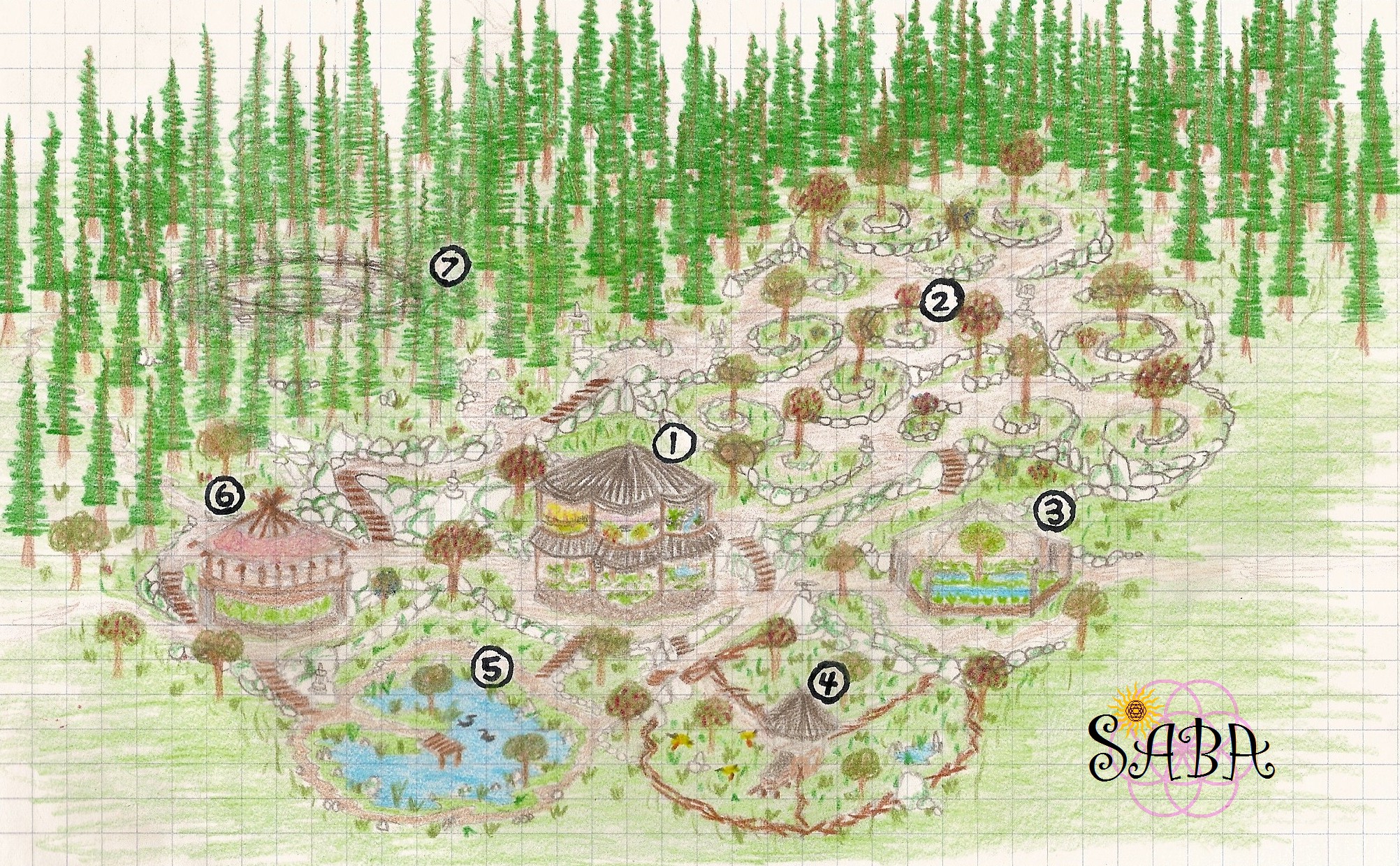 1 - Saba Center
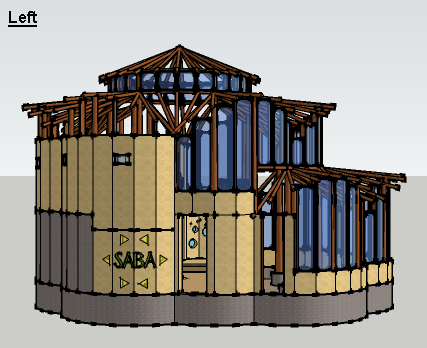
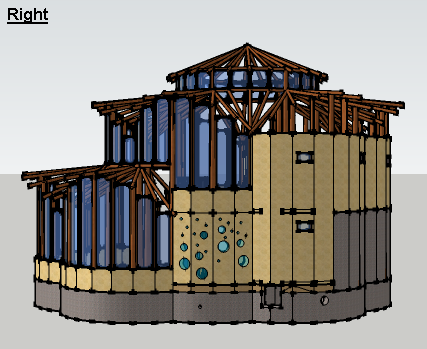
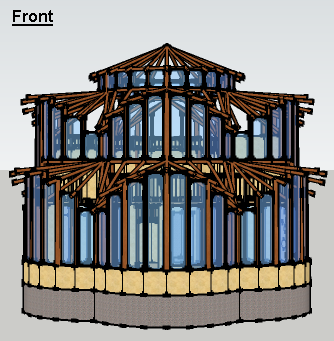
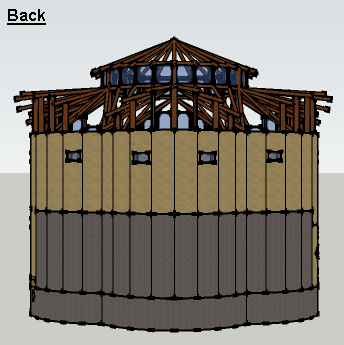
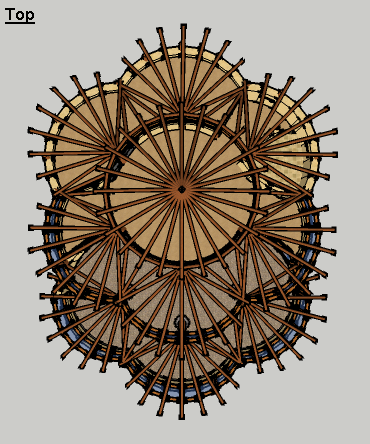
Saba Center is the envisioned community center and main structure at a Saba community. Saba Center's structural design ideally incorporates a large solar greenhouse on the southern side, an earth-sheltered root cellar on the northern side, a large open kitchen/dining/living room, and private and shared sleeping and work spaces.
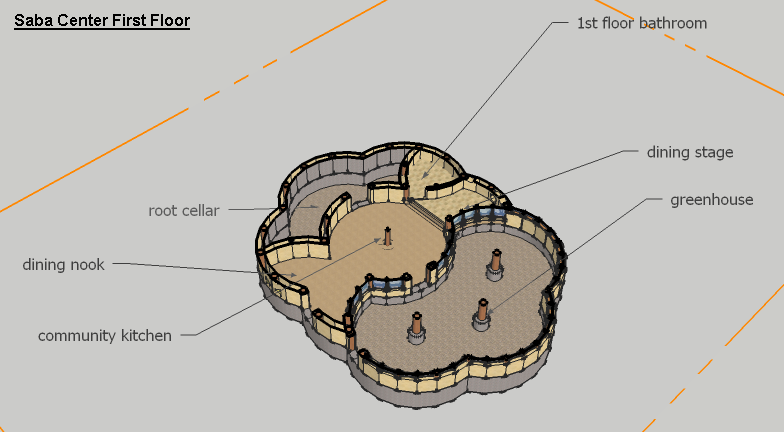
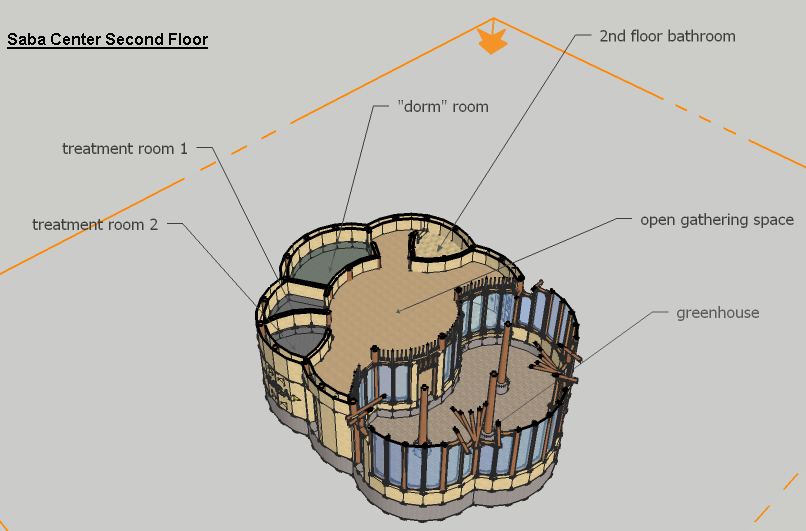
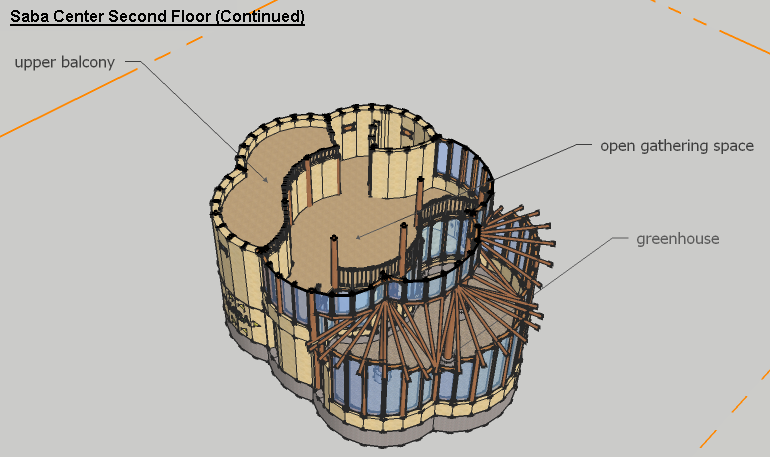
 2 - Spiraling Forest Gardens
Saba encourages and promotes cultivation of permaculture food forests at Saba communities. These food forests integrate perennial fruit and nut trees, shrubs, herbs, vines, and perennial vegetables, all which have yields directly beneficial to humans. We encourage the practice of organic no-till methods that emphasize building healthy soil by adding layers of organic compost on top, preserving a natural balance of beneficial mycorrhizal fungi and rhizobial bacteria, and ultimately contributing to increased yields and improved overall ecosystem health.
3 - Solarium SpaAs a special treat, communities may choose to build a solarium to house a swimming pool, solar-heated hot-tubs, and a sauna, for relaxing and rejuvenating after work. Useful tropical plants that enjoy warmth and humidity are integrated into this space, and the huge thermal mass of the pools assists in regulating temperatures.
4 - Regenerative Polyculture PasturesSaba promotes the use of pasture paddock chicken-raising techniques in an effort to provide chickens with a large portion of their natural food needs, (plants and insects,) through cyclical pasturing, allowing the perennial polyculture to regenerate and preventing overgrazing. Also, an open-bottom, moveable chicken coop provides chickens with a familiar place to lay their eggs and to roost at night while avoiding the manure build-up associated with stationary coops, ultimately contributing to happier, healthier chickens. One or more passive-solar structure(s) in the middle of the pastures can catch and store heat in thermal mass to help keep the chickens warm during the harsh winter. In return, the chickens provide the communities with fresh eggs, pest control, fertilizing, and light tilling.
5 - Pond Habitat and Aquaculture SystemIdeally Saba communities willh have one or more ponds for catching and storing rainwater and run-off, providing the ideal habitat for moisture-loving plants, a variety of fish species, and ducks.
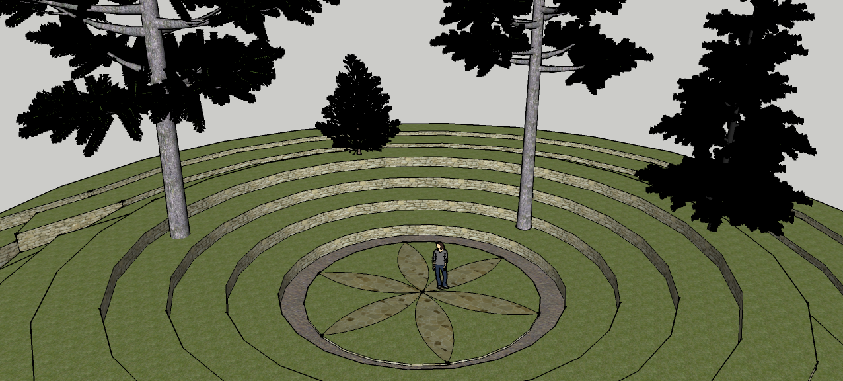
7 - Woodland AmphitheatreWith just the addition of stones found on the land, communities can sculpt an amphitheatre in a clearing in the woods, providing a secluded forest venue for outdoor gatherings and a place for quiet contemplation of nature. Below is a concept sketch:
 8 - Tiny Home Designs